Use your browser's Print → Save as PDF for best results.
District and School Facilitation
Education Experienced with Tim Clue
Social · Tools · Engaged · Minds

The New STEM Checklist
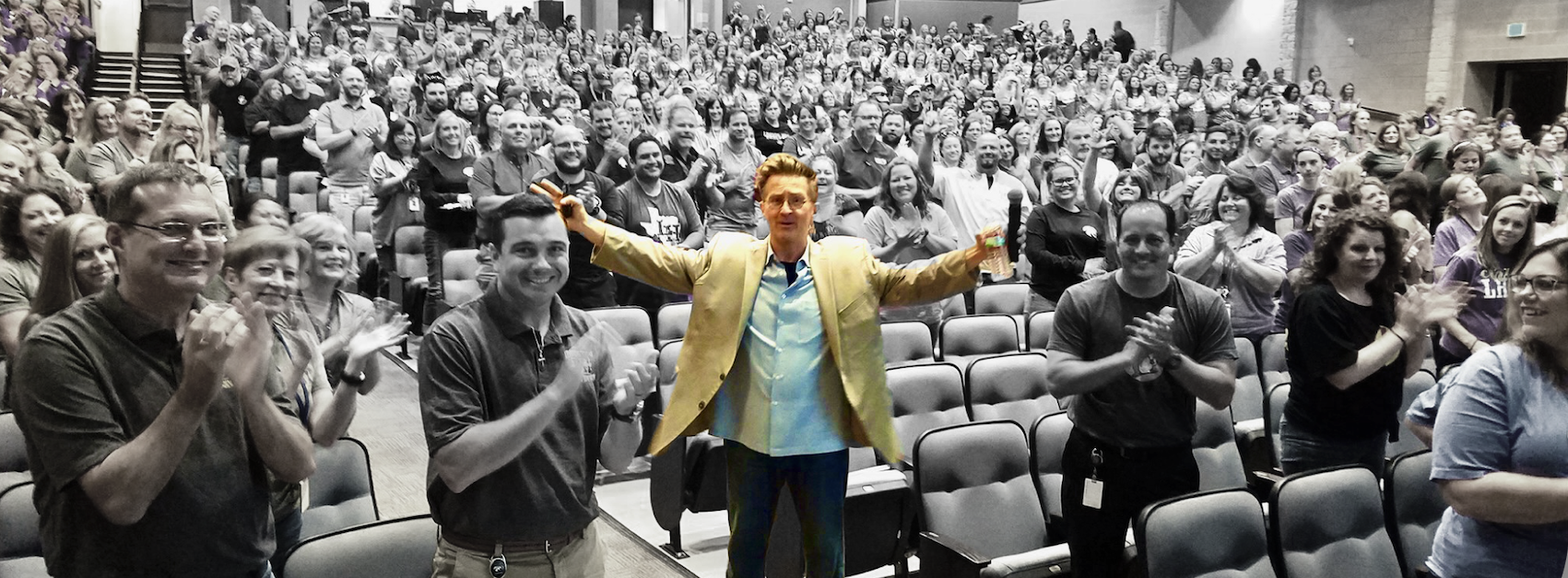
Students can share a classroom and still be disconnected. This checklist fixes that — 24 research-backed truths distilled into their simplest, most usable form. The living resource remains free to every educator.
A facilitation guide for district professional learning: flexible formats, Bloom's-aligned objectives, purposeful improvisation, minute-by-minute agendas, and a follow-up plan.
90-Minute Session
3–4 Hour Institute
Tim Clue
Facilitated by Tim Clue
Speaker, humorist, and creator of the New STEM Checklist
A dyslexic thinker building the classrooms he needed but never had — his neurodiversity shapes a facilitation style grounded in clarity, connection, improvisation, and practical action.
QR code to the checklist
The live checklist:
newstem.timclue.com
tim@timclue.com
For the district catalog

Session at a glance

Formats
90-minute interactive breakout or a flexible 3–4 hour institute, with final timing set alongside the district. Both reconnect the room through the same 24-truth checklist; the institute adds design time and a peer-teaching clinic.
Audience
Classroom teachers (K–12), instructional coaches, PLC leads, and school & district administrators.
Group size
20–500 participants. All rounds run on table groups of 5–7, so the facilitation scales without losing dialogue.
Materials
Screen and sound for short video clips; the printed or digital checklist (QR provided); a pen or device per participant; one commitment card per person (template supplied).
Experience
Selected Connected Classroom clips and discretionary improv exercises reinforce key concepts throughout. Tim chooses each exercise to fit the room, the available time, and the learning purpose.
Room setup
Round tables of 5–7. The session is built on table talk — rows are workable, but rounds are better.
Catalog description — short (56 words)

Students can share a classroom and still be disconnected. The New STEM Checklist turns 24 classroom truths — Social, Tools, Engaged, Minds — into a fast, funny, practical experience. Educators choose what fits their rooms, name the gap they most want to fill, and leave with one tool they can use the next morning.

Catalog description — full (137 words)

Students can share a classroom and still be disconnected. Attention is fractured, belonging is uneven, and the talent already in the room can go untapped. The New STEM Checklist offers a clear remedy: 24 simple, usable truths across Social, Tools, Engaged, and Minds. The rigor is already built into each card, reducing cognitive load instead of handing educators another pile of research.

But the checklist is the prompt, not the lecture. Facilitated by educator and humorist Tim Clue, the session runs on structured rounds of choice: educators mark the truths they already believe in, name the void they most want filled, and select the one practice they can share and repeat with a colleague tomorrow. Deep-dive moments let the room examine why its own choices work. Connected Classroom video examples and discretionary improv exercises make those ideas visible, participatory, and memorable. Every participant walks out with one tool in their pocket — powered by the talent already in the room.

newstem.timclue.com tim@timclue.com 773.230.3989
Pedagogical frame

Learning objectives & alignment

Objectives use Bloom's taxonomy verbs (Anderson & Krathwohl, 2001) and are written to be observable within the session.
90-minute session — two objectives
1
Participants will be able to prioritize the classroom truths (Social, Tools, Engaged, Minds) that address the greatest current need in their own setting and explain why that need matters now.Analyze · Evaluate
2
Participants will be able to apply one selected practice by describing exactly how, when, and with which students they will use it within the first week of implementation.Apply
Half-day institute — adds two objectives
3
Participants will be able to evaluate the conditions — routines, rituals, cognitive load, belonging — under which each chosen practice succeeds, connecting it to the research on attention, memory, and motivation.Analyze · Evaluate
4
Participants will be able to create a peer-sharing plan: a short "teach-one" walkthrough they can deliver to a colleague or their PLC.Create
Alignment
Danielson Framework
Domain 2 — Learning Environments; Domain 3 — Learning Experiences.
CASEL competencies
Relationship skills, self-management, responsible decision-making.
Adult learning
Choice, relevance, and immediate application — the conditions research says make PD stick.
How the room works — the facilitation design
1. The checklist is the prompt, not the lecture 24 truths, each one simple enough to act on Monday morning.
2. Round 1 — mark your favorites Educators choose the truths they already believe in; the room discovers its shared convictions.
3. Round 2 — name the void Each table names the one thing missing from their rooms this year. The void becomes the agenda.
4. Round 3 — your one tool Each person picks the practice they can share and repeat, and commits to it out loud with a partner.
5. The rigor is baked in, not bolted on When the room goes deeper, the science behind their own choices is already on the card — seamlessly integrated, never another handout.
6. Purposeful play makes the ideas stick Tim uses discretionary improv exercises and Connected Classroom clips throughout, choosing only what reinforces the concept, suits the room, and serves the outcome.
Everyone walks out with one tool in their pocket — powered by the talent already in the room.
newstem.timclue.com tim@timclue.com 773.230.3989
Facilitation in motion

The Connected Classroom

The videos are not decoration. They show Tim's facilitation approach in practice: useful ideas carried by humor, participation, and a room that is actively making meaning together.

Improv exercises — used with discretion throughout
Short improvisational exercises may be placed between discussion, research, and design rounds to reinforce listening, trust, quick thinking, shared attention, and collaborative risk-taking. They are never filler and never mandatory performance. Tim selects, adapts, shortens, or omits them according to the group, timing, accessibility needs, and the concept the room is working on.
Selected video references
Doers & Viewers
Checklist connection: Peers
Participation, peer learning, and the shift from watching to doing.
The Hand Raising Dilemma
Checklist connection: Every Voice
Making participation safe for the kids who never raise their hands.
Who's the Leader
Checklist connection: Focus
Attention and awareness — a quick game that sharpens watching, listening, and readiness to learn.
Full reference collection: timclue.com/funny-educator/connected-classroom
Extra credit · An optional wellness warm down

For rooms running on empty — compassion fatigue, overstressed veterans, experts in need of a reboot — a shared humor engagement from Funny Polling is available on request: a light, communal laugh that sends the room out restored, not drained. Because happy, healthy teachers make for happy, healthy students.

newstem.timclue.com tim@timclue.com 773.230.3989
The headline format

The flexible institute

3–4 hours · TBD
0:00–0:20
Welcome & framing
Humor and a brief discretionary improv exercise as the on-ramp; the case for one bull's-eye per problem. The 24-truth map goes up on every table.
0:20–0:40
The 24 truths, rapid tour
Four strands with sample research and exemplar video clips; participants begin marking favorites on their own copy.
Obj 1
0:40–1:10
Round 1 — Favorites & table dialogue
Which truths do you already live by? Tables build a shared top three and defend one choice to the room.
Obj 1
1:10–1:25
Break
Checklist copies stay on the tables — the marking continues in the hallway.
1:25–2:05
Deep-dive Block A — Social & Tools
The research and Connected Classroom examples behind belonging, rituals, relationships, seating, and cognitive load — with an optional reinforcing improv exercise, guided by the room's picks.
Obj 3
2:05–2:35
Round 2 — Name the void → design time
Tables name their void, then each educator adapts one practice to their own room: how, when, with which students.
Obj 2 · 3
2:35–2:50
Break
2:50–3:20
Deep-dive Block B — Engaged & Minds + implementation clinic
Voice, agency, metacognition, reading. A discretionary improv prompt activates the idea; plans then get stress-tested against real schedules and real students.
Obj 3
3:20–3:45
Round 3 — Teach one
Each participant delivers their one tool back to a partner — a rehearsed 90-second walkthrough they can repeat in their PLC.
Obj 4
3:45–4:00
Commitments, follow-up & close
Cards collected for the district report; 30- and 60-day follow-up schedule confirmed; close with humor and the QR.
Obj 4
Facilitator's note: the rounds are the session. Timings and discretionary improv exercises flex to the room — when a table names a void the whole room shares, that becomes the deep dive.
newstem.timclue.com tim@timclue.com 773.230.3989
Also available

The 90-minute session

90 minutes
0:00–0:08
The classroom we need to reconnect
Humor and a brief discretionary improv exercise open the room. Students can sit together and still be disconnected; the checklist gives the room a clear place to begin.
0:08–0:18
Social · Tools · Engaged · Minds
A rapid tour of the 24 truths and selected Connected Classroom moments. The rigor is already built into every clear, usable card.
0:18–0:32
Round 1 — Mark your favorites
Table talk: which truths do you already live by? Which surprised you? Tables surface their top three.
Obj 1
0:32–0:45
Round 2 — Name the void
What's missing from your room this year? Each table names and shares one void; the facilitator maps them live.
Obj 1
0:45–1:00
The room chooses the deeper look
The group examines why its most-chosen truths work. The science is seamlessly integrated on the cards — chosen by the room, never another handout.
Obj 1
1:00–1:18
Round 3 — Your one tool
Pick, adapt, commit. Partners pressure-test each other's plan: how, when, with which students, in week one.
Obj 2
1:18–1:30
Walk-out commitments & close
Each educator leaves with one practical tool, the free living checklist, and a commitment they can repeat with a colleague. Close with humor and a clear next step.
Obj 2
Facilitator's note: the rounds are the session. Timings and discretionary improv exercises flex to the room — when a table names a void the whole room shares, that becomes the deep dive.
newstem.timclue.com tim@timclue.com 773.230.3989
After the session

Outcomes, evidence & follow-up

Evidence of impact
Commitment cards
Every participant leaves with one tool written down — collected, so impact is countable, not assumed.
The room's own data
Chosen truths and named voids, aggregated — a picture of what your staff actually wants next.
A plan that repeats
The teach-one design means the practice spreads through PLCs without buying more sessions.
Follow-up timeline
Day 0
Every participant leaves with a written commitment card: one tool, one week, one classroom. District receives the full checklist PDF and site access.
Week 1
Facilitator report to the district: the truths the room chose, the voids they named, and the commitments made (aggregate, anonymized).
Day 30
Optional 45-minute virtual check-in: staff share what stuck, what stalled, and what they taught a colleague.
Day 60
PLC prompt: each team's 'teach-one' walkthrough becomes a five-minute agenda item — the practice repeats without another session.
Bring the checklist to your district.
tim@timclue.com
773.230.3989
newstem.timclue.com
QR code to the live checklist
newstem.timclue.com tim@timclue.com 773.230.3989